
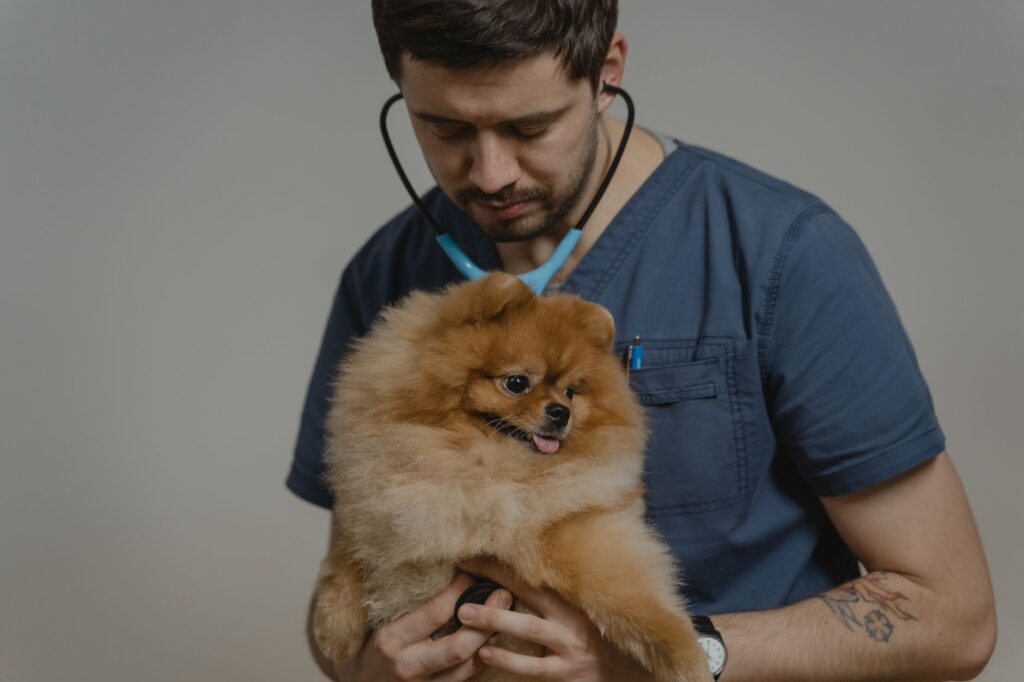
Why a Veterinary Google Business Profile is Your Real Digital Front Door
In local search engine optimization, proximity and trust rule the map. When pet owners search for ’emergency vet’ or ‘animal clinic near me’ on their smartphones, Google displays the ‘Local 3-Pack’—the map-based results that appear above traditional organic listings. Your veterinary Google Business Profile is the direct feed that populates these map spots. If your listing is incomplete, unoptimized, or neglected, Google will default to competitors who have actively managed their local presence.
Google’s local ranking algorithm relies on three core pillars: relevance, distance, and prominence. Relevance dictates how well a local profile matches what a user is searching for. Distance calculates how far each potential search result is from the user’s location. Prominence evaluates how well-known or authoritative the business is, which is calculated using information Google gathers across the web, including link metrics, review volume, and directories. To systematically address these pillars, practices must implement an integrated approach that connects their local listing with a comprehensive veterinary SEO campaign.
Choosing the Precise Primary and Secondary Categories
Perhaps the most critical setting within your profile is your category selection. Google uses your primary category to establish the core identity of your business. Selecting the wrong primary category can severely limit your visibility for high-value search queries.
For most general practices, the primary category should be ‘Veterinarian’ or ‘Animal Hospital’. If your facility operates strictly as an emergency and critical care center, selecting ‘Emergency Veterinary Service’ as your primary category will align your profile with urgent search intent. For specialized or niche offerings, utilize secondary categories such as:
- ‘Veterinary Care’
- ‘Veterinary Specialty Clinic’
- ‘Animal Services’
- ‘Pet Groomer’ (only if you offer professional grooming as a distinct service)
- ‘Pet Boarding Service’ (only if you offer dedicated boarding facilities)
We advise clients to avoid ‘category dilution.’ Do not add secondary categories that are irrelevant to your actual business model simply to capture more traffic. Focus on the core clinical services that reflect your actual medical offerings.
The Critical Optimization Pillars for Local Veterinary Search
To maximize your local rankings and convert casual searchers into scheduled appointments, your profile must be completely optimized, accurate, and actively maintained.
1. Perfect Your NAP (Name, Address, Phone) Consistency
Google’s algorithm continuously cross-references your business information across the web to verify its authenticity. Any discrepancy in your business name, physical address, or phone number can dilute search trust and lower your local rankings. Your business name must match the actual, real-world name of your clinic as used on your building signage and marketing materials. Avoid adding artificial keywords to your business name (such as ‘City Animal Hospital – Best Dog & Cat Vet’), as this directly violates Google’s guidelines and can lead to immediate profile suspension.
Furthermore, ensure that the address and phone number on your profile are perfectly mirrored on your website’s contact page. For practices looking to establish deep technical alignment between their site and their map listing, incorporating structured schema markup is an essential step. Implementing proper schema helps search engines crawl and verify your physical location data seamlessly. You can learn more about aligning your technical assets by reading our guide on technical SEO for veterinarians.
2. Build an Active, Ethical Review Acquisition Engine
Review volume, velocity, and average star rating are massive ranking signals for local prominence. Beyond rankings, reviews are the ultimate social proof for anxious pet parents. To build a robust review profile, you must establish a system within your practice that prompts happy clients to share their experiences. Train your receptionists to ask for feedback during checkout, and follow up via email or SMS with a direct link to your review form.
Never offer financial incentives, discounts, or free services in exchange for reviews. This violates Google’s terms of service and FTC regulations, which can result in the removal of all your reviews or complete profile suspension. Instead, focus on authentic, organic growth by making the review process as seamless as possible for your clients.
3. Detail Your Clinical Services
The ‘Services’ section of your profile allows you to outline exactly what medical treatments, diagnostic tools, and preventive care options you provide. Rather than relying on generic auto-populated options, manually build out detailed service items. Provide brief, clear descriptions of your services, such as:
- Routine Wellness Exams
- Feline-Specific Veterinary Care
- Veterinary Dental Cleanings and Oral Surgery
- In-House Diagnostics and Radiography
- Spay and Neuter Procedures
By filling out these service sections with accurate, descriptive text, you provide search engines with contextual keywords that help your profile rank for long-tail searches. This approach aligns perfectly with an overarching veterinary content strategy that bridges on-page informational content with your local profiles.
4. Utilize Google Posts to Drive Engagement
Google Posts are essentially micro-updates that appear directly in your local knowledge panel. These posts can be used to announce seasonal health warnings (like heartworm or flea and tick season), share holiday hours, promote community events, or highlight new associate veterinarians joining your clinical team. Aim to publish at least one update every week to signal to Google that your business listing is actively managed.
Adapting to AI Search and Modern Query Behavior
Local search is undergoing a rapid shift. Search engines are increasingly utilizing AI and natural language processing to answer conversational questions, such as ‘where is an accredited cat vet who does dental cleanings in my area?’ These systems pull information not just from your category, but also from the unstructured text in your Google reviews, Q&As, and custom services list. To ensure your practice remains visible as search technologies evolve, explore how to position your clinic for conversational search queries with our insights on AI search optimization for veterinarians.
Using local attributes is another way to help AI-driven searches categorize your practice. Ensure you select all relevant attributes in your dashboard, such as ‘Wheelchair accessible entrance,’ ‘Identifies as women-owned’ (if applicable), or ‘Appointments required.’
Integrating Local Optimization with Your Overall Digital Strategy
An optimized map profile is most effective when it is supported by a high-performing website. If your website is slow, difficult to navigate, or lacks clear service information, pet owners who click through from your map listing will quickly bounce back to search results. To build a truly dominant local presence, your practice must treat map optimization and organic optimization as two halves of a single, unified strategy. This integrated approach is at the core of our specialized veterinary local SEO services.
We recommend starting with a diagnostic assessment of your website and local listings. To understand where your practice currently stands, you can request an expert SEO audit from our team to identify hidden errors, track ranking performance, and uncover clear local growth opportunities. If you are ready to implement a professional local marketing strategy, feel free to contact us today to speak with an experienced veterinary SEO strategist.
Veterinary SEO Checklist
Use these practical checks when reviewing your practice's search presence.
Key Takeaways
Related Veterinary SEO Articles
Continue exploring practical veterinary SEO strategy and search insights.
 VETERINARY SEO
veterinary service content: How to Write Better Content for Veterinary Service Pages
Read Article → VETERINARY SEO
Choosing the Right Veterinary GBP Categories for Local Visibility
Read Article → VETERINARY SEO
veterinary keyword research: How to Do Keyword Research for a Veterinary Practice
Read Article →Research Sources
- Google Business Profile Help - Guidelines for representing your business on Google — Verified primary guidelines regarding business names, category selection, address rules, and the strict prevention of keyword stuffing.
- Google Search Central - How to influence your local ranking on Google — Confirmed the official ranking factors of relevance, distance, and prominence used by the local search algorithm.
- Search Engine Journal - Local SEO: A Guide to Google Business Profile Optimization — Provided specialist consensus on best practices for managing categories, posting frequency, and generating organic reviews.
Boost your local search dominance. Partner with IKE SEO to optimize your veterinary search performance and attract more pet owners today.
We can connect content, local visibility, technical foundations, and service relevance into a practical veterinary SEO roadmap.